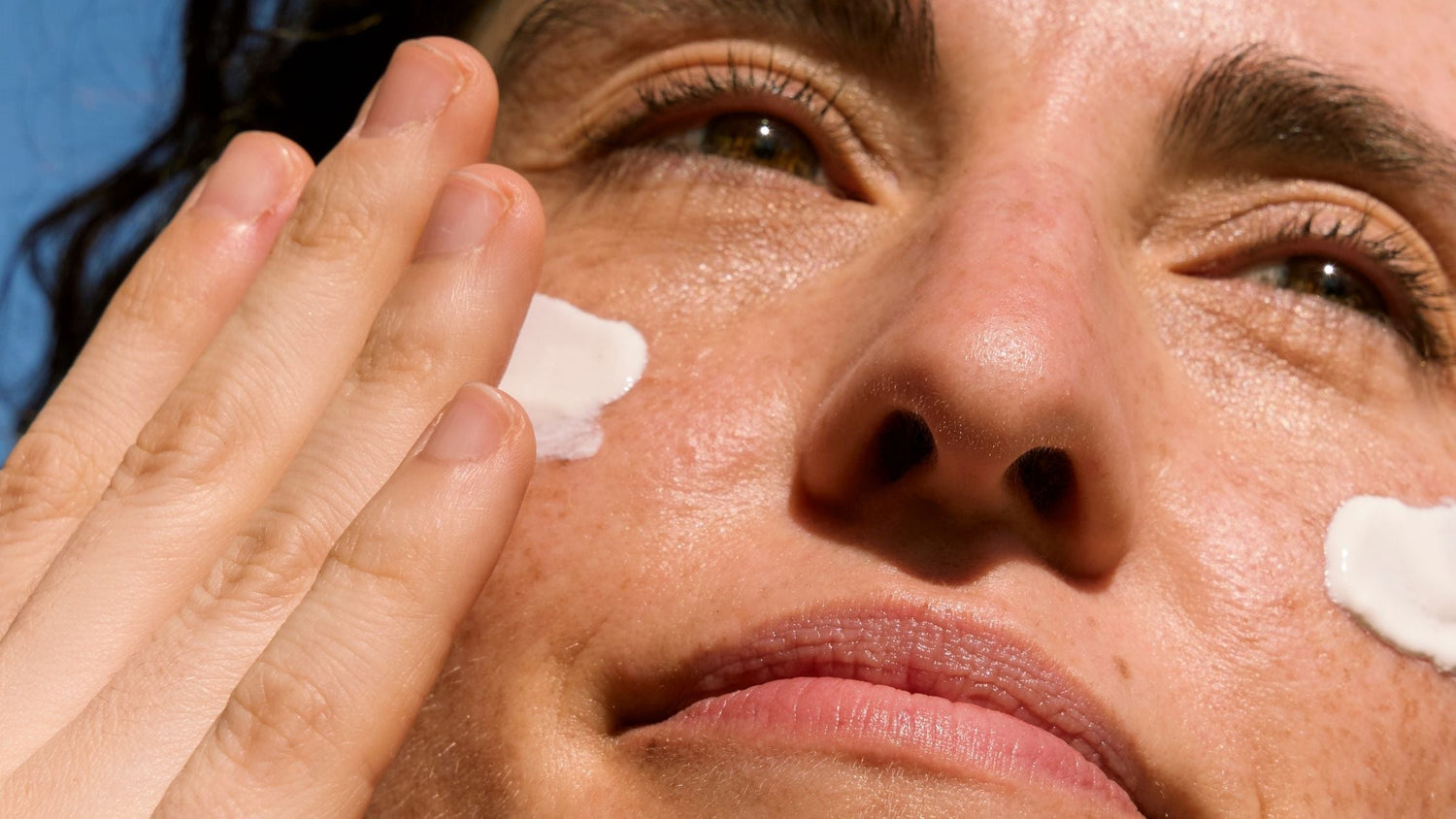

The most important shift in skincare isn't a new active or a faster result. It's a change in the question we're asking. For years, the goal was to correct — to smooth, resurface, and erase. The smarter question now is how to keep skin functioning well for as long as possible. That's skin longevity, and it's reshaping how the best formulators think about every ingredient they use.
And the more researchers look at why skin ages, the more they keep arriving at the same quiet driver: chronic, low-grade inflammation. Adaptogenic mushrooms address that driver directly, which is exactly why they're moving from wellness curiosity to one of the most intelligent ingredients in longevity-focused skincare.
The real reason skin ages faster (and it isn't wrinkles)
Skin doesn't age in a straight line. It ages in a loop.
That loop is driven by a process researchers call inflammaging — the slow, low-grade inflammation that builds in skin over years. You don't notice it as redness or irritation day to day. You notice it later: a barrier that's slower to repair, skin that suddenly reacts to products it once tolerated, and a complexion that loses its bounce and clarity.
Here's why it compounds. When the skin barrier weakens, it loses water and becomes more vulnerable to stressors like UV light and pollution. That stress triggers more inflammation. More inflammation weakens the barrier further. Left unchecked, the cycle feeds itself — and it accelerates every visible sign of aging along the way.
This is the real problem longevity skincare has to solve. Not wrinkles as a symptom, but the inflammation and barrier breakdown underneath them. Which is precisely where adaptogenic mushrooms become interesting.
What are adaptogenic mushrooms?
Adaptogens are a class of natural substances — many of them mushrooms — that help a living system adapt to stress and return to balance. In the body, they've been used for over 2,000 years to support resilience. On skin, the principle is the same: rather than forcing one fixed outcome, they help skin regulate itself.
The reason they can do this comes down to one group of compounds: beta-glucans. These are polysaccharides that act almost like messenger molecules, communicating with skin cells to calm inflammation, support hydration, and encourage the skin's own repair processes. Alongside beta-glucans, mushrooms are rich in antioxidants and triterpenoids that defend and strengthen skin over time.
The result is an ingredient that works with skin's biology instead of overriding it — a fundamentally different approach to the aggressive, single-target actives that dominated the last decade.
How adaptogenic mushrooms support skin longevity
Longevity comes down to keeping skin's core systems working. Adaptogenic mushrooms support three of the most important ones.
They calm inflammation at the source. Because beta-glucans help regulate the skin's inflammatory response, mushroom extracts soothe reactive, sensitive skin and reduce the look of redness — interrupting the inflammaging loop before it does cumulative damage.
They defend against oxidative stress. Skin is under constant assault from free radicals generated by UV exposure and pollution. Mushrooms are among the most antioxidant-rich ingredients in nature, helping neutralise that damage before it weakens the barrier and breaks down structural proteins like collagen.
They support renewal and resilience. Beta-glucans encourage healthy cell renewal and help skin hold onto moisture, while compounds like adenosine support firmness and structure. The payoff is skin that keeps its bounce and recovers faster — the difference between skin that merely survives stress and skin that bounces back from it.
Meet the three mushrooms doing the heavy lifting
Not all mushrooms do the same job. The most effective longevity formulas pair complementary species so they cover more ground together than any single active could alone. Three stand out.
Reishi — the calming one. Rich in triterpenoids and beta-glucans, reishi is prized for soothing stressed, reactive skin, easing the appearance of redness, and supporting the moisture barrier. If your skin flares easily, reishi is the mushroom that earns its place first.
Chaga — the antioxidant shield. Often called a "skin shield," chaga delivers an exceptionally high antioxidant load, helping skin defend itself against the daily oxidative stress of pollution and UV that quietly speeds up aging.
Cordyceps — the revitaliser. Known in traditional medicine as the "energy mushroom," cordyceps is rich in cordycepin and adenosine alongside its antioxidants. It helps neutralise free radicals and calm inflammation while supporting skin's firmness and natural radiance — the mushroom that helps tired, stressed skin look vital again.
Together, these three cover the full longevity picture: calm, defend, revitalise. It's the thinking behind our Mushroom Repair Cream — three adaptogens chosen to work as one.
Why doing less is the smarter longevity strategy
There's a temptation, when you care about your skin, to do more — more steps, more actives, more exfoliation. But the research on inflammaging points the other way. Over-active routines, aggressive acids, and constant resurfacing can compromise the barrier and trigger the very inflammation that ages skin faster.
This is the case for doing less, intelligently. A single, well-formulated step built around multitasking adaptogenic actives can calm, defend, and revitalise at once — without the irritation that comes from layering five products that each pull skin in a different direction. For sensitive and reactive skin especially, restraint isn't the compromise. It's the strategy.
Skin longevity isn't about doing more. It's about doing what genuinely works, consistently, for skin that stays healthier for longer.
How to bring adaptogenic mushrooms into your routine
You don't need to overhaul anything. Adaptogenic mushrooms slot most naturally into your moisturiser step, where a cream can deliver them alongside the hydration and barrier support skin needs daily.
A few principles:
- Consistency beats intensity. Mushroom actives work cumulatively. Daily use over weeks does more than any single application ever could.
- Simplify around them. Pair a mushroom cream with a gentle cleanser and daily SPF, and let the formula do the work rather than competing with a dozen other actives.
- Patch test if your skin is reactive. Mushroom extracts are generally gentle and well tolerated, but sensitive skin always deserves a careful introduction.
Our Mushroom Repair Cream was built for exactly this — a single, considered step that brings reishi, chaga, and cordyceps together for skin you're caring for over the long term, not just for tomorrow morning.
Frequently asked questions
Are adaptogenic mushrooms safe for sensitive skin? Yes. They're among the gentler skincare actives, and mushrooms like reishi are specifically valued for soothing reactive, easily irritated skin. As with any new product, patch test first if your skin tends to react.
Do mushroom skincare products actually work? The bioactives in mushrooms — beta-glucans, antioxidants, and triterpenoids — are well studied for calming inflammation, defending against oxidative stress, and strengthening the skin barrier. They work gradually and holistically rather than producing a dramatic overnight change, which is exactly what makes them suited to long-term skin health.
How are adaptogenic mushrooms different from hyaluronic acid or retinol? Conventional actives usually target one pathway — hydration, or cell turnover. Mushroom extracts work across several at once, supporting the skin's own regulation rather than forcing a single result. That makes them gentler and well suited to resilience-focused routines.
How long until I see results? Because mushrooms work with skin's natural processes, give them time. Most people notice calmer, more comfortable, and more resilient skin within a few weeks of consistent daily use.
Are mushroom skincare products vegan? They can be — mushrooms are naturally vegan. At Joplus, every formula is vegan and made with 95%+ natural, EU-made ingredients.
The takeaway
The future of skincare isn't louder. It's smarter — built on ingredients that strengthen skin's own resilience instead of fighting it. Adaptogenic mushrooms sit at the centre of that shift, and they're only getting started.